What is the Future of Peacekeeping Missions in Africa?
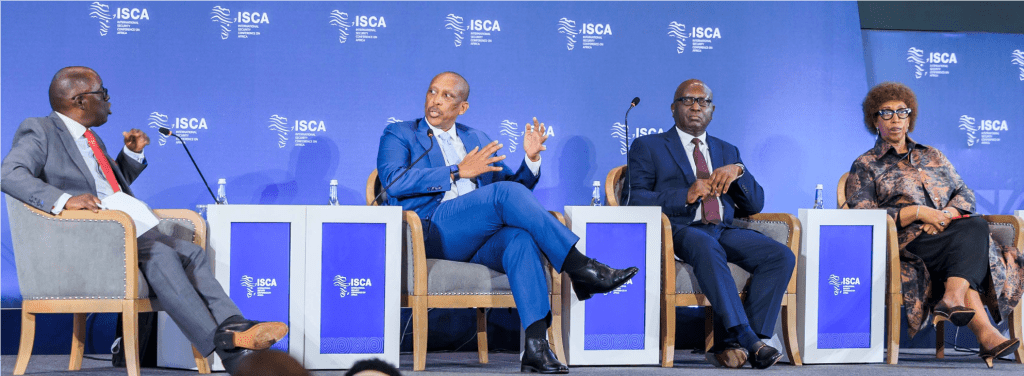
Joel Kibazo , Gen Patrick Nyamvumba, Dr. Philip Kasaija Apuuli and Ms. Clotilde Mbaranga Gasarabwe respectively
The panel, titled “What is the Future of Peacekeeping Missions in Africa?”, brought together an esteemed group of practitioners and analysts deeply familiar with the evolution and current crisis of peacekeeping on the continent. The panelists included Gen Patrick Nyamvumba, High Commissioner of Rwanda to Tanzania and a veteran peace operations leader; Dr. Philip Kasaija Apuuli, Associate Professor at Makerere University and a scholar-practitioner in African peace missions; Ms. Clotilde Mbaranga Gasarabwe, former UN Assistant Secretary General for Safety and Security and senior field leader in Mali; and H.E. Ahmedou Ould-Abdallah, Board Advisor for the International Peace and Security Institute and a diplomat with broad peace operation experience across West Africa. Moderated by seasoned Journalist Joel Kibazo, the panel drew on decades of engagement with peacekeeping, grappling with issues from funding and strategy to ownership and the changing character of African conflict.
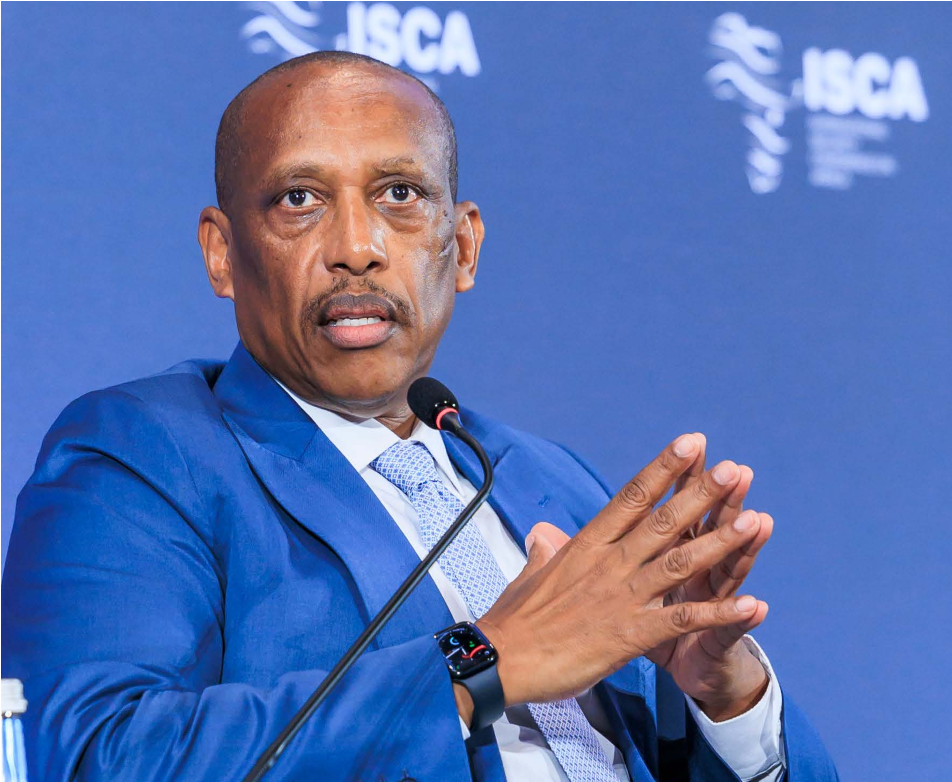
Gen Patrick Nyamvumba
High Commissioner of Rwanda to Tanzania
Gen Nyamvumba argued that, notwithstanding the great expense and length of United Nations peacekeeping missions in Africa—such as MONUSCO in the Democratic Republic of Congo, which had spent over $25 billion with little measurable success—the continent remained “nowhere” in terms of achieving sustainable peace. He contextualized his critique within the broader shift of global geopolitics: as external actors turn inward and prioritize their own defense and economies, African issues increasingly slip from the global agenda. Thus, there is a growing imperative for Africa to take charge of its conflicts and their resolutions, lest the continent be left, as in the colonial “scramble” of 1885, at the mercy of external interests and rivalries.
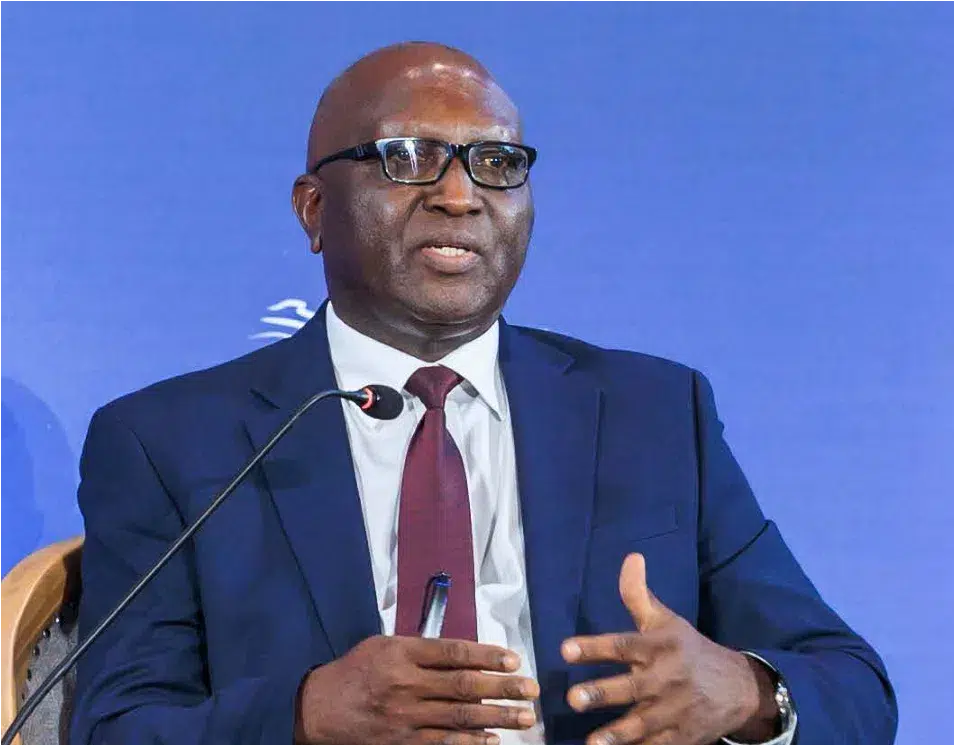
Dr. Philip Kasaija Apuuli
Associate Professor at Makerere University and a Scholar-Practitioner in African Peace Missions
Dr. Philip Kasaija Apuuli traced the origins of peacekeeping, reminding the audience that— contrary to common perception—the term and practice are absent from the original United Nations Charter and arose as an improvised response to the Suez Crisis in 1956. Traditionally, peacekeeping operated on the principles of host nation consent, impartiality, and the non-use of force except in self-defense. In Africa, however, the pattern has changed: not only do most contemporary conflicts defy the classic interstate model (they are intra-state, fragmented, and fueled by politics, economics, and even climate change), but global appetite for intervention under UN mandates is at a low ebb. Of some 75 UN peacekeeping missions since 1956, around 35 have been in Africa, with five ongoing as of 2024. Despite this heavy focus, panelists agreed that peacekeeping on the continent, both in its classical and contemporary forms, is in acute crisis—a tool deployed more as a desperate improvisation than a strategic solution, and as likely to perpetuate international presence as to resolve root causes.
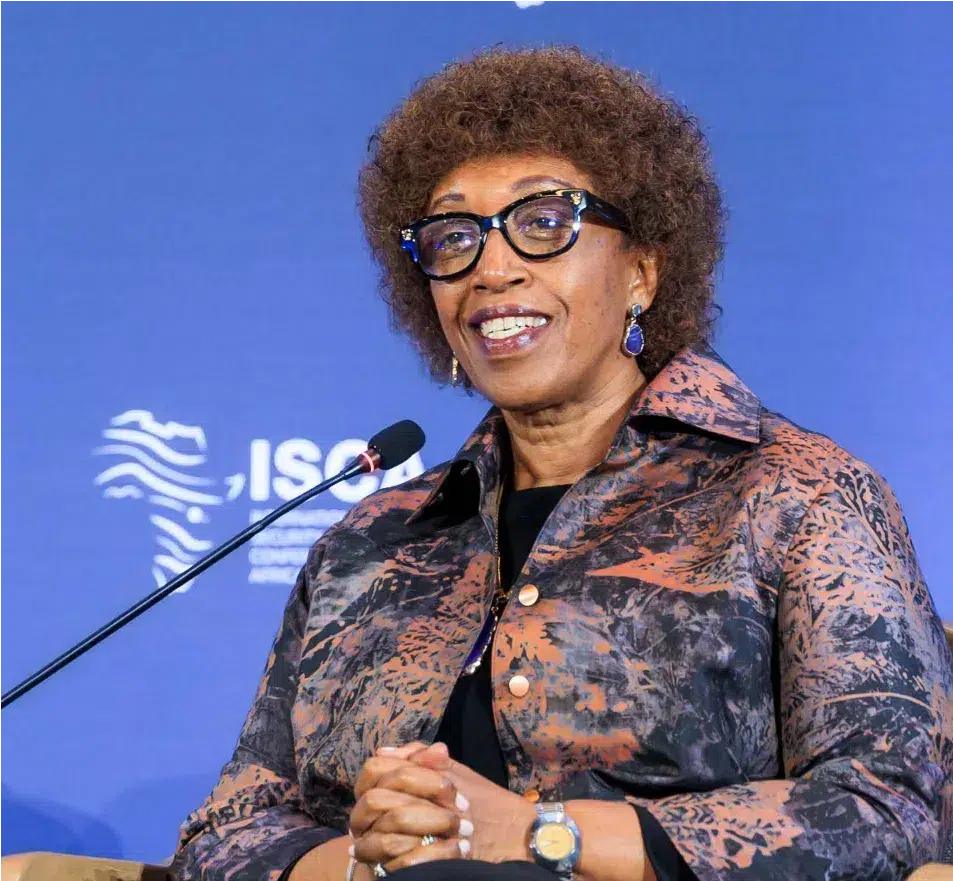
Ms. Clotilde Mbaranga Gasarabwe
Former UN Assistant Secretary General for Safety and Security and Senior Field Leader in Mali
Ms. Gasarabwe, having both shaped and implemented peacekeeping policy at the UN’s highest levels, used her experience to dissect the flawed logic linking mission “setting” (deployment) and “exit.” The decision to deploy is nearly always political, shaped by member state appeals or Security Council resolutions, and critically dependent on international, not local, consensus.
But once deployed, peacekeeping operations are too often presented as short-term fixes with clear benchmarks for exit—a pattern seldom honored in practice, especially when the root causes of crisis are left unaddressed. Gasarabwe contrasted cases like Guinea, where robust dialogue and regional support forestalled a mission, with Mali, in which peacekeeping’s massive expense failed to account for context-specific drivers of extremism and collapse. In her assessment, missions work when they are explicitly temporary, when strong national ownership is present or fostered, and when peacekeeping is complemented—instead of substituted—by genuine local and regional security development.
Ambassador Ould-Abdallah, drawing on his extensive mediation experience, forcefully argued that contemporary peacekeeping faces insurmountable challenges as most African conflicts are now internal rebellions, not wars between states. The proliferation of non-state actors—tribal, ethnic, political, or transnational—renders traditional peacekeeping models ineffective. These actors are not unified, often thrive on illicit economies, and may view sustained conflict as profitable, thus resisting the very peace international missions are charged to restore. He suggested that rather than maintaining obsolete peacekeeping approaches, there is a need for adaptive models that prioritize deeper understanding of local dynamics and tailor responses accordingly.
From the panel and audience, several critical challenges and inheritances surfaced. One is the abiding problem of funding: peace operations are expensive, with missions such as MINUSMA in Mali costing upwards of a billion dollars a year, while actual “peace” remains elusive and the interests of both international donors and local populations are often misaligned. H.E. Moussa Faki Mahamat, chair of ISCA’s advisory council and former AU Commission Chairperson, intervened from the audience with a pointed assessment. He declared that the era of traditional peacekeeping in Africa is effectively over. Drawing on personal experience, he detailed the disconnect between field realities—in which troops are hamstrung by restrictive mandates and logistical excess—and the immense UN expenditures that deliver little progress. Faki recounted the failure to equip African regional initiatives, such as the G5 Sahel, with sufficient resources for their anti-terror operations, even as the UN system spent multiples on missions in the same geographic space. He lauded the passage of UN Resolution 2719, allowing 75% of African peacekeeping to be financed by the UN in principle, but lamented its non-implementation due to great power reluctance. According to Faki, the only path forward is for Africans themselves to lead, finance, and design the future security architecture of the continent.
In the closing round, the panelists were united in urging reforms anchored in realism and African agency. Gen Nyamvumba pointed to the relative effectiveness of African-led interventions—bilateral arrangements like Rwanda’s deployment in Mozambique and the model of lightly equipped, technologically supported, rapid reaction forces as models to be scaled up under AU endorsement. He emphasized the need to exploit innovations such as AI, drone surveillance, and early warning mechanisms to overcome the scale and unpredictability of modern threats. All future interventions, he added, must prioritize an understanding of local political and cultural contexts, which were too often neglected by rotating multinational contingents unfamiliar with the terrain and society.
Dr. Apuuli advocated for a strategic shift away from reliance on international peacekeepers. He recommended institutionalizing and strengthening the African Peace and Security Architecture (APSA), which encompasses mediation, early warning, the African Standby Force, the Panel of the Wise, and a revitalized Peace Fund. Prevention, he argued, should be the priority, as it is both cost-effective and feasible if bolstered by timely intelligence and mediation, and less reliant on expensive foreign troop deployments. Apuuli regarded the trend toward short-term, ad hoc coalitions and support missions—rather than classic, indefinitely extended blue helmet deployments—as inevitable and potentially positive if matched by local legitimacy and robust exit strategies.
Ms. Gasarabwe and Ambassador Ould-Abdallah both underscored the urgent need to diversify funding sources. Gasarabwe called upon African billionaires and the private sector to consider security as both a public good and an investable business, especially in new technologies and the training of African personnel. She emphasized that peace operations can only be effective if matched by transparent governance, credible dialogue, and a deliberate focus on building state capacities so that temporary missions evolve toward sustainable, internal solutions
Ould Abdallah, too, insisted that Africa must shoulder a larger share of peacekeeping costs to acquire a greater say in decision-making and to earn international respect, reminding the audience that African troops have proven their mettle in global theaters but remain underrepresented and undervalued in funding and command.
The future, the panel concluded, must be grounded in the realities of modern African conflict: internal, complex, and susceptible to exploitation by myriad actors. Peacekeeping must evolve from externally mandated, open-ended missions to African-owned frameworks that privilege prevention, local knowledge, rapid deployment, technological innovation, and diversified funding. Missions must be temporary, context-sensitive, and always designed to support rather than replace the building of sustainable national institutions. Political commitment at all levels—from African governments, the AU, private sector, and international partners alike— will be decisive in creating a peace and security architecture that is adaptive, legitimate, and ultimately successful in meeting Africa’s manifold security challenges.
Resources
Contact Us
- Address: Cogebanque building, 4th floor, KN 63 St,Kigali
- PO Box: 7483 Kigali - Rwanda
- Tel: +250 788 350 391
- E-mail: info@iscafrica.org
©2026 - International Security Conference on Africa (ISCA). All rights reserved.