Borderlands in crisis: security, identity, and marginalisation in Africa
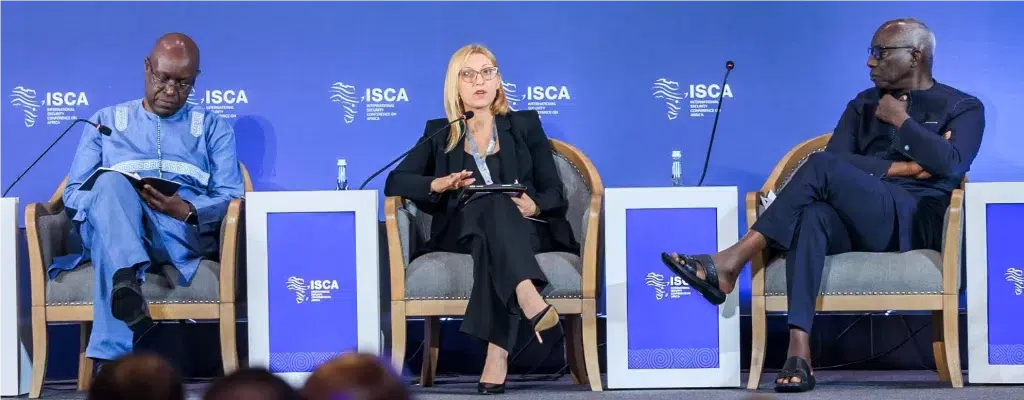
Dr. Wafula Okumu (Executive Director of the Borders Institute), Dr. Bojana Coulibaly (Scholar of Conflict Discourse) and H.E. Adama Dieng (Former UN Special Adviser on the Prevention of Genocide)
The panel discussion titled “Borderlands in Crisis: Security, Identity, and Marginalisation in Africa,” offered a deep and multidimensional exploration into the layered realities of African borderlands and the urgent need for rethinking narratives, policy frameworks, and sites of agency. Moderated by Sylvanus Wekesa of King’s College London and featuring Dr. Wafula Okumu, Executive Director of the Borders Institute; H.E. Adama Dieng, former UN Special Adviser on the Prevention of Genocide; Dr. Bojana Coulibaly, a scholar of conflict discourse; and Andrew Mwenda, founder of The Independent, the panel brought together experiential knowledge, institutional insights, and historical reflection to probe the structural and everyday crises embedded in Africa’s borderlands.
The discussion opened by reviewing the evolution of Africa’s borders from the Berlin Conference of 1884-85, through the messy completion of boundary demarcation by the 1920s, and into the post-colonial era where the peripheries of the state carried layers of contestation, fluid identities, and insecurity.
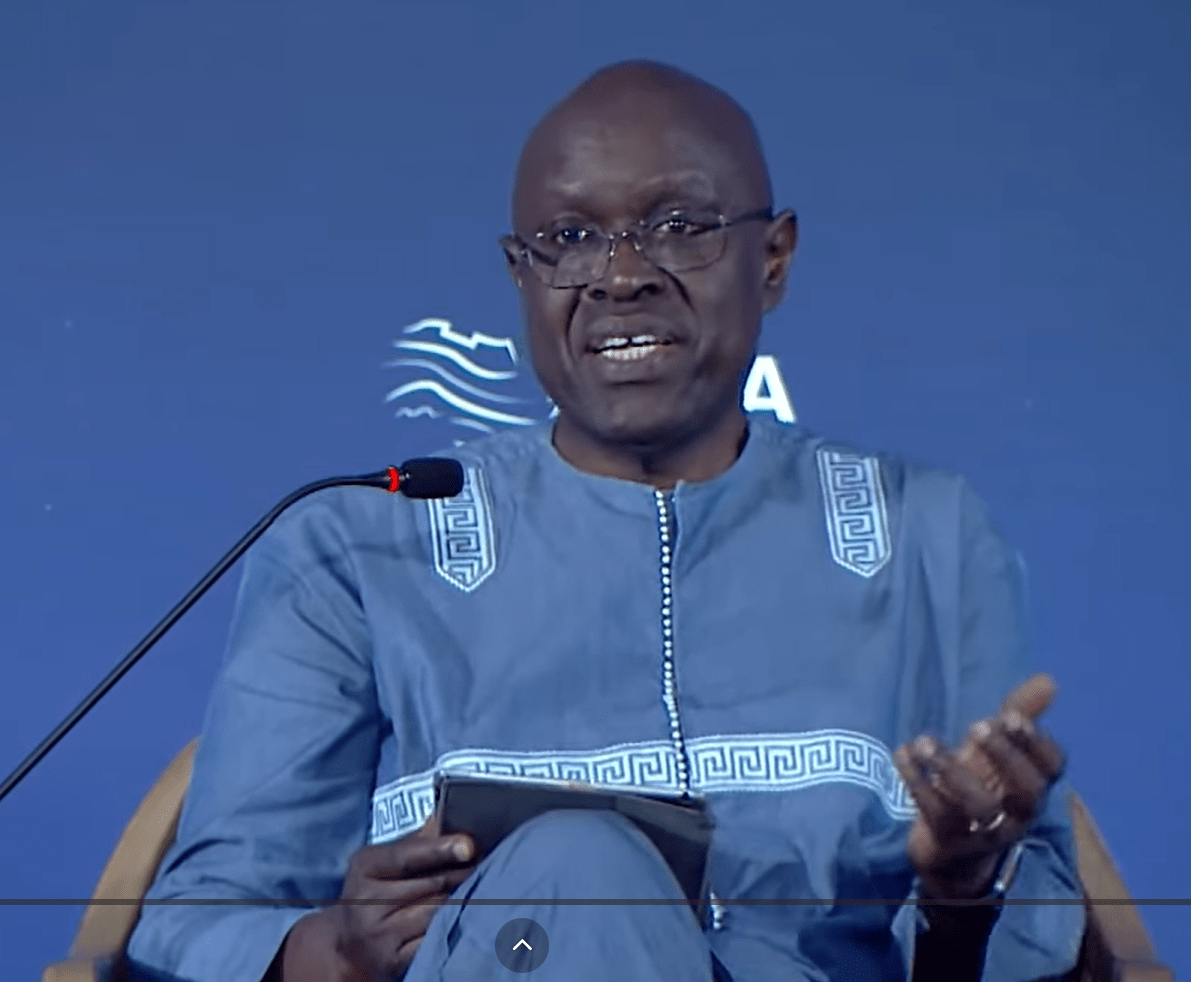
Dr. Wafula Okum
Executive Director of the Borders Institute
Dr. Okumu argued that African borders—often misunderstood as static, linear demarcations—embody complex histories and shifting narratives, with each segment reflecting a unique mix of social, ecological, and historical forces. The arbitrary and shifting nature of these colonial boundaries, he asserted, continues to generate far-reaching consequences for migration, integration, and, most acutely, security. Indeed, the lack of reliable African-generated data on borderland movement and the excessive reliance on European paradigms not only hinders African agency but has enabled African migration to be “weaponized” in contemporary European politics. Okumu cautioned against the uncritical adoption of foreign vocabularies and conceptual confusion—terms like “intangible borders,” “ungoverned spaces,” and “security zones”—which, he argued, produce both analytical paralysis and policy disempowerment. He highlighted the persistent failure to “Africanize” either the legal management or the imaginative register of boundaries, noting that, six decades post-independence, many boundaries retain the Euro-colonial meanings for which they were originally designed.
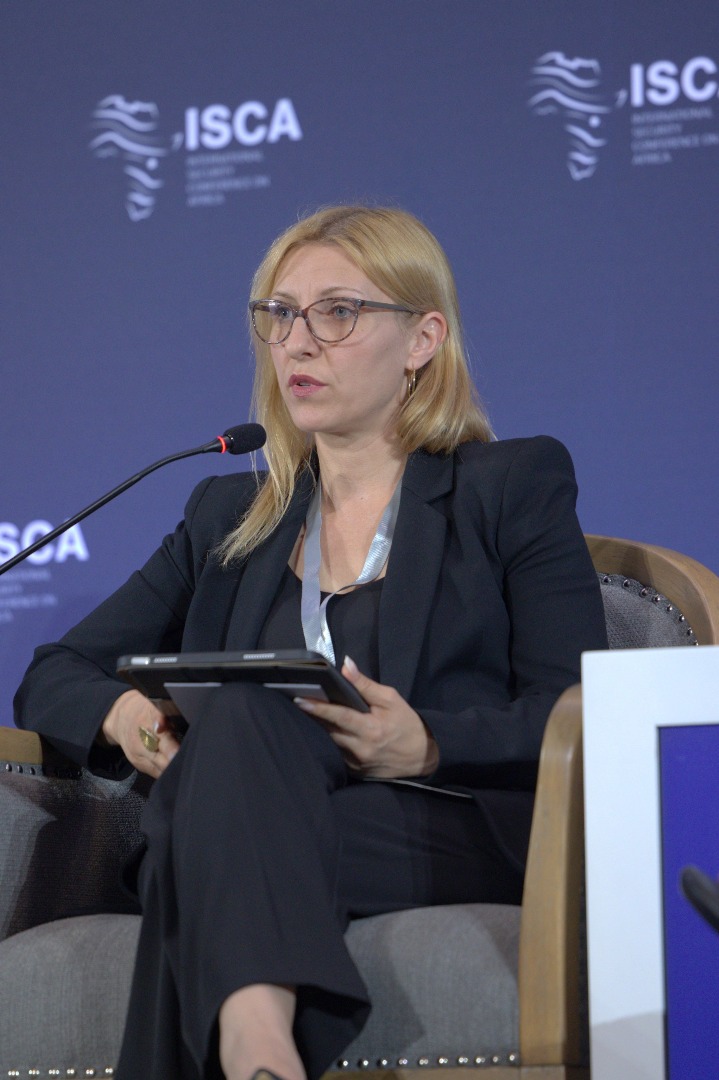
Dr. Bojana Coulibaly
Scholar of Conflict Discourse
Building on this, Dr. Coulibaly examined how externally imposed borders have catalyzed the fabrication and weaponization of ethnic identities, producing regional fascisms and cycles of marginalization and violence. The legacy of colonial manipulation, she noted, is not just a series of technical cartographic problems but a set of exclusionary narratives that strip communities of belonging and foster nativist antagonisms. In the Democratic Republic of Congo, for instance, Tutsi communities have been forced into the impossible position of being “forever foreign,” perpetuating exclusion, forced displacement, and intractable violence.
This situation becomes more complicated when international actors—whether through peacekeeping missions, humanitarian interventions, or the political economy of refugee crises—reinforce local power dynamics in ways that obscure root causes. Coulibaly stressed that the shifting of narrative roles, such that victims are named perpetrators and local solutions are delegitimized, is a central driver of conflict and inertia. The core, she argued, is the lack of African ownership in framing and addressing such problems, necessitating a deliberate takingback of discourse and agency.
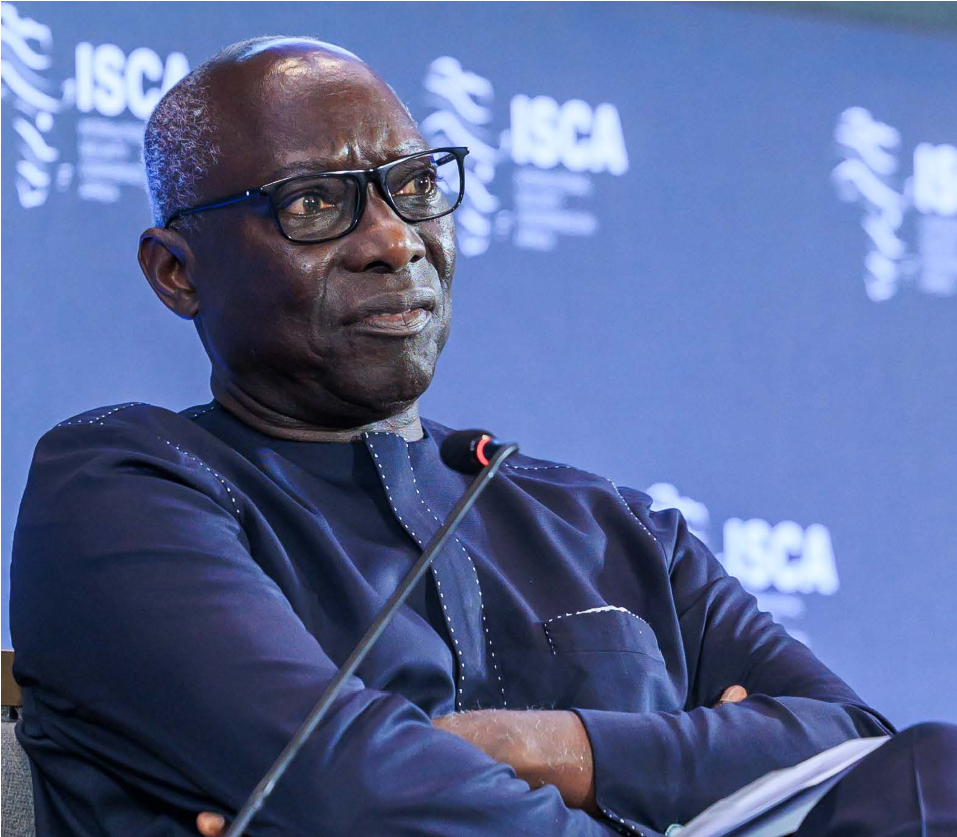
H.E. Adama Dieng
Former UN Special Adviser on the Prevention of Genocide
H.E. Adama Dieng provided a sobering analysis of the feedback loops among insecurity, identity crises, and marginalisation in African borderlands. He highlighted that security is not a discrete technical challenge but is fundamentally intertwined with social recognition, access to resources, and legitimacy. Marginalization of ethnic minorities and borderland populations—often deprived of education, infrastructure, and healthcare—creates the conditions for identity-based conflict and fuels instability far beyond the margins themselves. Dieng called for precisely the kind of holistic and courageous rethinking that had shaped the ISCA conference: one capable of revisiting not just boundaries but also the paradigms of national sovereignty, identity, and the meaning of security itself. He lamented that, while Africa is often described as “the richest continent,” political fragmentation and elite indifference perpetuate division and immobilism. For Dieng, integration projects risk failure if they overlook the lived experiences and aspirations of marginalized communities in border zones.
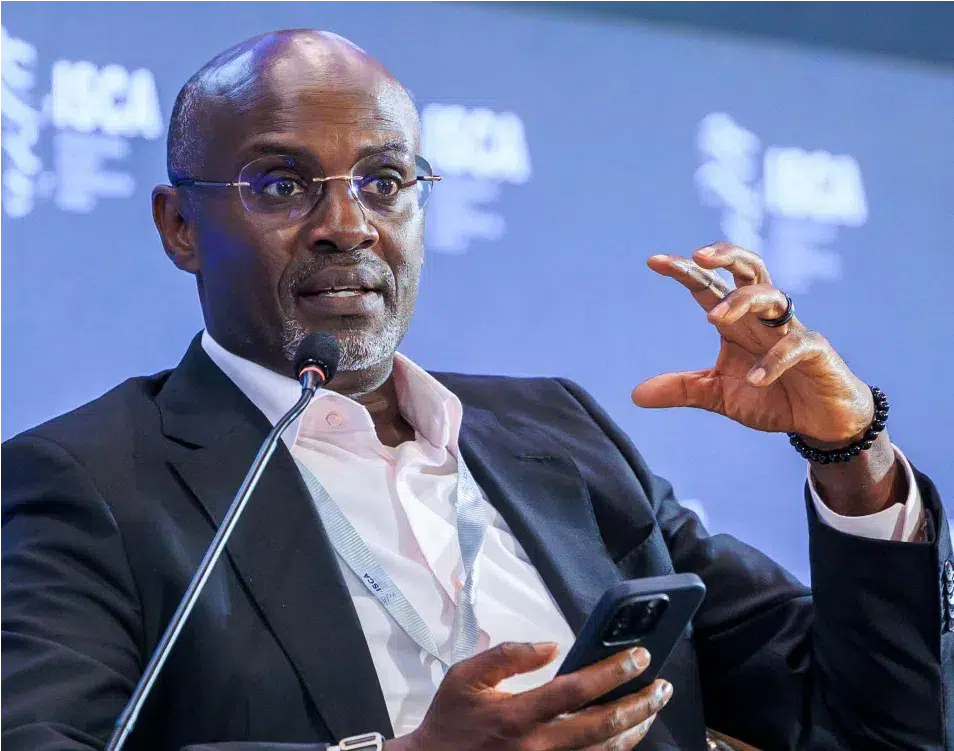
Andrew Mwenda
Founder of The Independent
Andrew Mwenda advanced the discussion by challenging the idea that African borders are simply artificial in the same sense as other borders worldwide. Unlike Europe or Asia, he argued, Africa’s borders lack the legitimizing history of wars, negotiations, and state-formation from the inside out. Instead, they remain foreign constructs, maintained by international law
rather than organic social contracts. Africa’s states, he noted, did not arise from internalbargains or shared military struggle; as a consequence, the institutions of governance, law, and sovereignty themselves often feel extraneous, suspended above society and unmoored from the aspirations or consent of populations. The crisis of legitimacy, for Mwenda, is thus not just about boundaries on a map, but about the ontological question of statehood—whose interests are served, whose voices are heard, and who gets to define the national “we.” Echoing the critique of ideological hegemony, Mwenda observed that African leadership, law, governance models, and even the language of rights and development remain captive to imported ideas, inhibiting genuine endogenous political and social evolution.
In their interaction with audience questions and further interventions, the panelists identified multiple obstacles and opportunities. On the institutional front, Dr. Okumu detailed both the promise and frustration of the African Union Border Programme, which aspired to transform borders from “barriers to bridges” by demarcating and rationalizing boundaries, promoting cross-border cooperation, and serving African, not external, agendas.
While progress was made, especially through the drafting of the AU convention on cross-border cooperation, political commitment waned, and foreign partners stepped in to fill the gap, further distancing African ownership from African realities. Okumu lamented that not only do African states rely on outsiders for re-demarcation and management of boundaries, but, in many cases, AU conventions remain unratified and unfunded, rendering institutional frameworks ineffective.
When considering solutions, Coulibaly, Dieng, and Okumu agreed that real progress lies in ownership—of narratives, of problems, and of solutions. Reconceptualizing identity from a fixed or ethnicized marker to a more fluid and inclusive register, as postulated for pan Africanism and Ubuntu, offers a basis for reframing citizenship and belonging. Language remains a powerful tool: the revalorization of indigenous languages like Swahili, Fulani, and Wolof, alongside efforts to reform the role of colonial languages in education and governance, was presented as both a practical and symbolic step toward decolonizing African minds and institutions.
Leadership, many panelists agreed, is critical. Political elites and intellectuals must avoid the temptation to instrumentalize ethnic or borderland identities for short-term gain and should instead cultivate inclusive national narratives, encourage participatory approaches to policy, and be willing to rethink boundaries when justified by population realities and aspirations.
Audience interventions highlighted the ongoing struggle for legitimacy and the challenge of building a sense of statehood and citizenship in territories and communities that have long experienced exclusion, suspicion, or outright violence from the state. The call for a shift from sovereignty imposed from above to sovereignty experienced and constructed from below resonated strongly, as did suggestions to leverage new technological and educational infrastructures to overcome practical impediments to mobility, integration, and local economic development.
In concluding remarks, the panel called for several concrete steps: an urgent restoration of the AU Border Programme within AU structures, expedited ratification and implementation of the cross-border cooperation convention, regular ministerial meetings to drive continental ownership, and a deliberate Africanization of border management protocols and narratives. They urged scholars, practitioners, and policymakers alike to engage in critical self-reflection, abandon self-disempowering paradigms, and cultivate an ethos of innovation, mutual respect, and pan-African solidarity.
The capacity for peaceful boundary adjustment, regional economic partnerships, and flexible integration models—when led by Africans for Africans—was presented as not only possible but historically necessary. Above all, panelists insisted that Africa’s borderlands, far from being spaces of perpetual crisis and marginalisation, offer rich laboratories for reimagining the future of the continent—a future founded on dignity, mutual recognition, and collective sovereignty.
Resources
Contact Us
- Address: Cogebanque building, 4th floor, KN 63 St,Kigali
- PO Box: 7483 Kigali - Rwanda
- Tel: +250 788 350 391
- E-mail: info@iscafrica.org
©2026 - International Security Conference on Africa (ISCA). All rights reserved.