Africa’s View on Deterrence – A Unique Approach
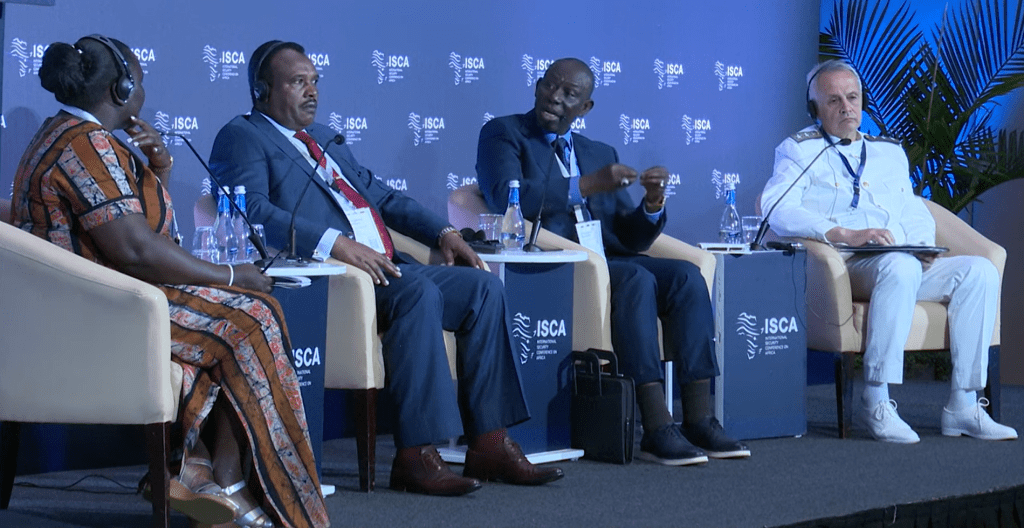
The ISCA panel “Africa’s Views on Deterrence – A Unique Approach,” moderated by Associate Professor Emily Comfort Maractho, brought together experienced military and policy leaders to examine the distinct challenges and prospects for deterrence within Africa’s security landscape. The discussion underscored that Africa’s context is marked by persistent political instability, intra- and interstate conflicts, violent insurgencies, terrorism, and a host of transnational threats compounded by corruption, bad governance, and the lingering consequences of colonial border legacies. Both Lt Gen (Rtd) Adan K Mulata (Executive Chairman, Peace Prospect Institute-Africa -PPI-Africa) and Lt Gen (Rtd) Balla Keita (Former Force Commander, MINUSCA) emphasized that conventional concepts of deterrence— grounded in the balance of power and immediate projection of force—often prove insufficient in African theatres, where conflicts are deeply embedded in governance failures, legitimacy crises, and porous borders.
A critical point of agreement emerged among the panelists: the foundation for credible deterrence in Africa is effective governance. Rather than relying primarily on military hardware or imported doctrines, African states must develop governance models that are not only robust but also context-specific and inclusive, addressing historical grievances, ethnic cleavages, and the politics of marginalization. The persistent inability to implement meaningful deterrence was attributed, in part, to the fragmentation of political authority and the lack of a unified strategic vision—issues that enable both internal and external actors to exploit divisions to their advantage. The panel argued that external intervention, while sometimes unavoidable, frequently exacerbates volatility by entrenching dependency and deepening local rivalries. Thus, a shift toward internally-driven solutions was promoted as essential, both for efficacy and for the restoration of local agency.
Vice Admiral Mitko Petev’s reflections widened the conversation by considering the comparative security architectures seen in other regions, but he cautioned against templates that neglect Africa’s unique structural realities. In the African context, deterrence cannot rest upon the threat of overwhelming force alone. Instead, it must be predicated upon legitimacy, shared values, predictable justice, and a demonstrated capacity for both collective defense and constructive conflict management.
The legacy of colonial division continues to fuel mistrust and fragmentation, enabling external actors to intervene by accentuating or manipulating localized disputes. Given this, Africa’s approach to deterrence and security must begin by reclaiming ownership of its narratives, institutions, and security paradigms.
The panelists called for the development of continent-wide strategies for governance and deterrence. Such frameworks should promote regional solidarity as a counterweight to external manipulation, foster mutual assistance in security matters, and support the capacity for Africa led peace operations. Crucially, collective security mechanisms—such as regional defense pacts and standby forces—were highlighted as tools for reducing dependency on foreign intervention in peacekeeping and conflict mediation. A collaborative approach not only amplifies deterrence credibility but also signals both to domestic actors and external powers that Africa possesses the political will and organizational capacity to secure its own stability.
Furthermore, there was consensus that for deterrence to be meaningful, it must be legitimate in the eyes of African populations. This means that security strategies must be woven together with developmental objectives, anti-corruption initiatives, transparent rule of law, and effective delivery of public goods. As panelists highlighted, a government detached from its citizens or perceived as predatory will face persistent challenges of insurgency and sabotage, regardless of external security guarantees or deterrent posturing. Thus, deterrence in Africa, at its most effective, entails an alignment of state and society—where governments are representative, institutions are trusted, and communities feel invested in the peace they help produce and sustain.
The session ultimately called for a paradigm shift: deterrence in Africa demands an approach rooted in sovereignty, legitimacy, and solidarity, anchored by institutions that are both resilient and deeply connected to local realities. Only by moving beyond externally imposed models, prioritizing governance reform, fostering regional cooperation, and cultivating a culture of shared responsibility can Africa realize its unique and enduring vision for deterrence and sustainable peace.
Resources
Contact Us
- Address: Cogebanque building, 4th floor, KN 63 St,Kigali
- PO Box: 7483 Kigali - Rwanda
- Tel: +250 788 350 391
- E-mail: info@iscafrica.org
©2026 - International Security Conference on Africa (ISCA). All rights reserved.